If you're still taking most of your bookings by phone, you already know it works — you've been running your restaurant this way for years, maybe with a paper diary or a shared notes app next to the till. The question isn't whether phone bookings work at all. It's whether they're quietly costing you more than you've added up, and what an online system actually replaces versus what it just adds on top.
Here's a straight look at both sides, without the assumption that switching solves every problem.
What phone-only booking actually costs you
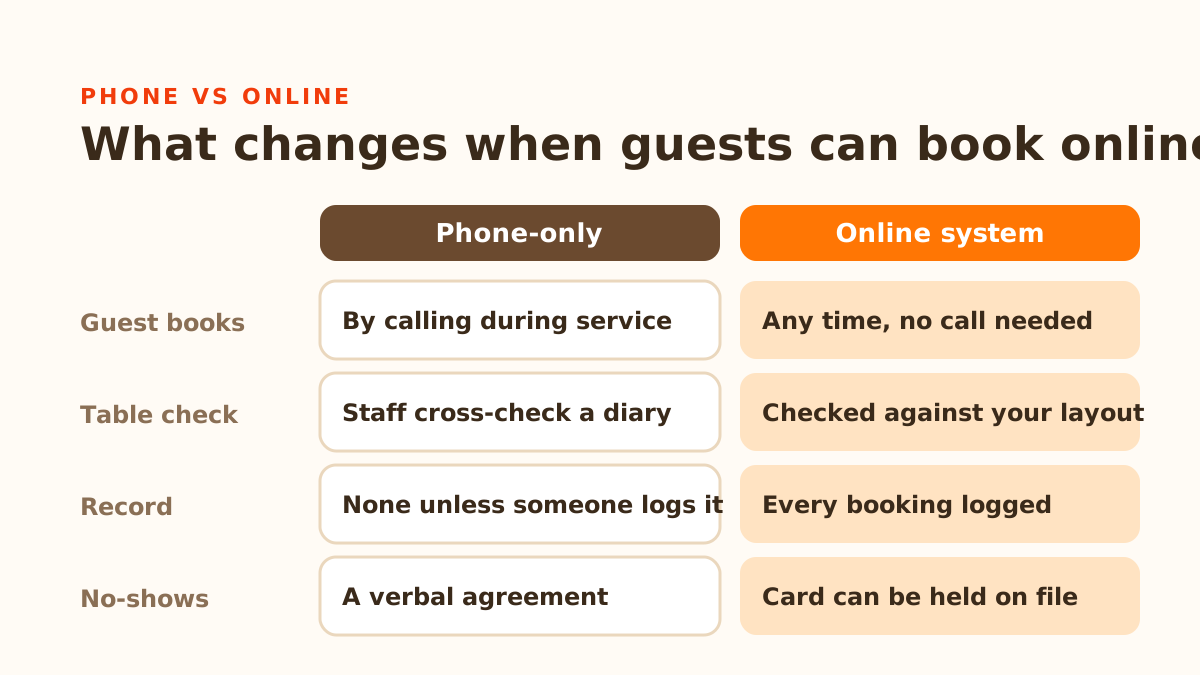
Staff time during service, not just downtime. The call that comes in at 7:15pm on a Saturday doesn't wait for a quiet moment — whoever picks up has to stop what they're doing, find the diary or the tablet, check availability, and write it down correctly, all while tables are turning around them. Multiply that by however many calls you get on a busy night, and it's real labour cost that never shows up as a line item.
Double-booking risk that scales with how busy you are. A paper diary or a shared spreadsheet doesn't stop two staff members from writing different parties into the same slot — it only works if everyone cross-checks it perfectly, every time, including during the exact rush hours when there's the least attention to spare for it. The nights you're most likely to double-book are the nights you can least afford an awkward conversation with a walk-in party you can't seat.
No record once the call ends. Unless someone manually logs it, there's no searchable history of which guests are regulars, who's no-shown before, or how many covers you're tracking for a given night until someone tallies the diary by hand. That makes it hard to spot patterns — like a guest who's cancelled last-minute three times — before it happens again.
A language barrier that's invisible until it isn't. If a guest would rather text or type a booking request in Korean or Chinese than navigate an English phone call, they may just not bother calling at all — and you'd never know you lost that booking, because it never became a data point.
No-shows with no recourse. A phone booking is just a verbal agreement. If a party doesn't show, you've lost the table for that slot with nothing to fall back on — no card on file, nothing to reference afterward beyond "they didn't show."
What an online system actually changes
The core job of an online booking system is narrower than the marketing usually suggests: it's not magic, it's mostly about moving the point where information gets captured and checked from "a person's memory during a busy shift" to "a system that checks itself." Concretely, that means:
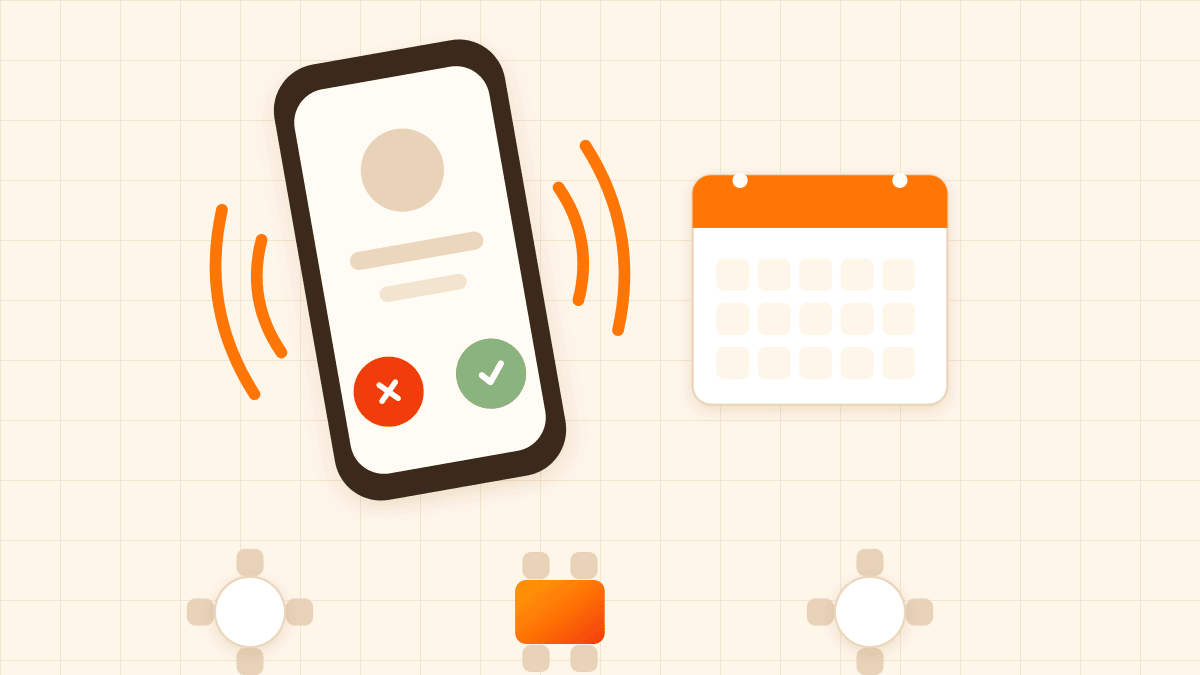
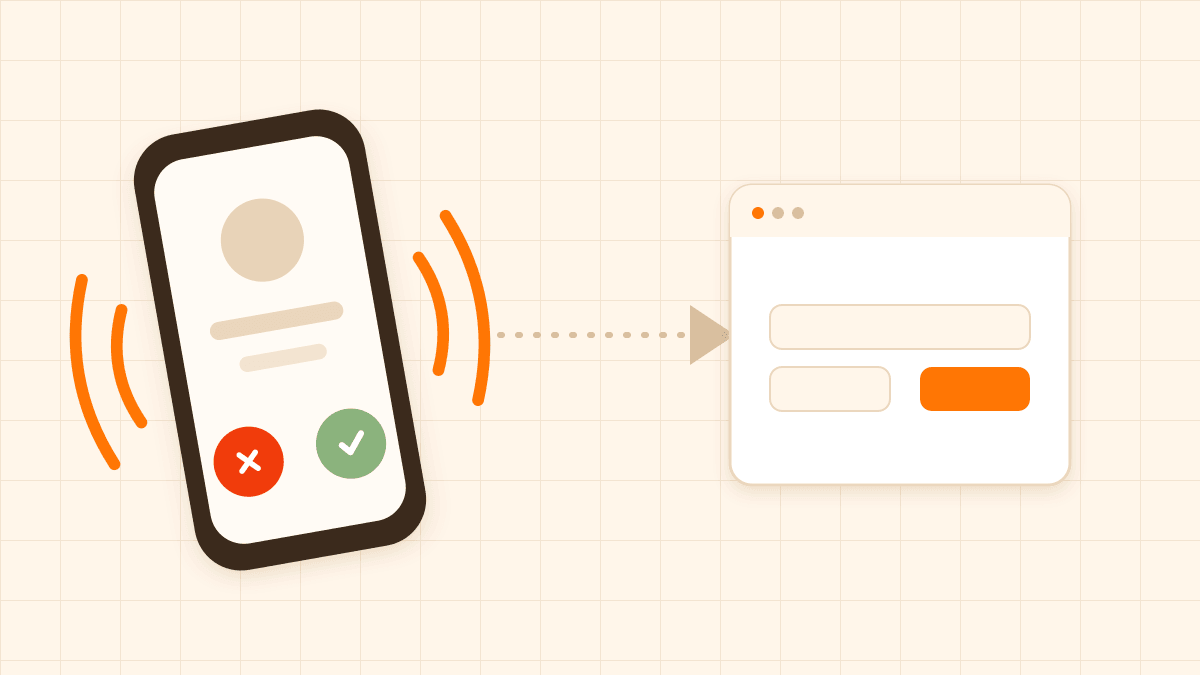
- Guests can book without calling during service. A request submitted at 11pm from a guest's phone doesn't interrupt anyone — it just sits there until someone looks at the dashboard, or gets auto-confirmed if you've set your store up that way.
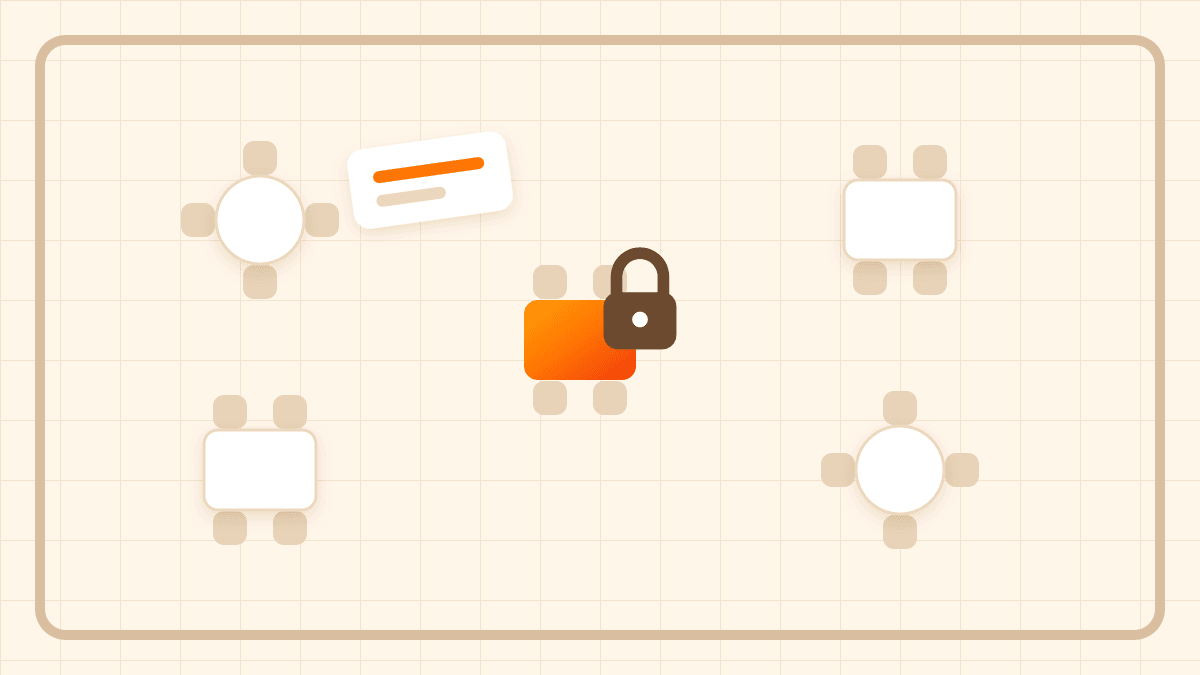
- Table assignment gets checked automatically. Instead of a person mentally cross-referencing which tables are free and which can be pushed together for a group of six, the system checks party size against your actual table layout and how tables connect, and flags conflicts before they become a seated double-booking.
- Every booking has a record. Names, party sizes, timestamps, and status (confirmed, seated, completed, no-show, cancelled) are all logged automatically, so you're not reconstructing the night from memory if a dispute comes up later.
- No-shows aren't purely a write-off. A card can be held on file when the booking is made (nothing is charged upfront), and if a guest doesn't show or cancels past your cutoff, you have the option to follow up on it — instead of just absorbing the lost table with no record of who was responsible.
What switching doesn't magically fix
It's worth being honest about the limits, too. An online system doesn't stop your phone from ringing — guests who prefer calling will keep calling, and that's fine; most restaurants run both in parallel rather than replacing one with the other. It also doesn't fix a chaotic floor plan on its own — if your table combinations are genuinely ambiguous or your staff don't trust the system's assignment, you'll still get manual overrides, just fewer of them over time as everyone learns to trust it. And it doesn't remove the need for a person to actually check the dashboard — an unattended queue of pending requests is just a different version of the same problem.
How to tell if you've actually outgrown phone-only booking
A few honest questions, rather than a sales pitch:
- How many calls do you get on your busiest night, and who's answering them? If it's the same person expediting food or running the floor, that's a real cost even if no invoice says so.
- Have you had a double-booking in the last few months that you can trace back to a diary mix-up? One bad Saturday can cost more in lost covers and an apologetic conversation than months of a flat monthly fee.
- Do you have guests who'd rather text than call, in any language? If you don't know, it's worth asking a few regulars directly rather than assuming your current volume reflects true demand.
- What actually happens when someone no-shows right now? If the honest answer is "nothing, we just lose the table," that's the exact gap a card-on-file no-show policy is meant to close.
If none of that resonates, a diary genuinely might be enough for your volume — there's no reason to add a system you don't need. But if you recognised more than one of those, it's worth trialling rather than guessing. DiningMate runs a flat $49/month with a 3-month free trial that doesn't require a card to start, specifically so you can run it through real busy nights — not just a quiet week — before deciding whether it's actually solving a problem you have.